Rohit's Realm - Book Reviews

// rohitsrealm.com / archive / category / books

May 31, 2004

Rohit Reviews: Dude, Where's My Country?

I just wrapped up my first book of the summer. Well, actually, that's a lie. I've now read three books since summer started last week, but Dude, Where's My Country? is the first one I've read that I hadn't read before. I actually purchased it last year, when I saw Michael Moore speak in Berkeley, but I only found time to read for fun last week. My impression of the book is similar to my response to his speech: mixed feelings.

September 07, 2005

Rohit Reviews: Life of Pi

Life of Pi, the international bestseller by Yann Martel, first came into my sights a few years back when someone I knew recommended it to me as the book that would make me re-evaluate religion. My own religious views aside, that statement is a very powerful one and I was immediately intrigued by the novel. However, classes and work always occupied my time over the last few years, and moreover, I prefer the classic to the contemporary, so it was only now that I actually had a chance to pick up a copy and get through it. Did it make me re-evaluate religion? Not really. Was it an amazing novel? Absolutely.

January 22, 2007

Rohit Reviews: Confessions of an Economic Hitman

Over the holidays, I had the chance to read John Perkins Confessions of an Economic Hitman, a purported exposé of America's shady economic dealings with developing nations in the post-World War II era. In a narrative that reads like fiction—maybe it is—Perkins weaves a tale linking his own work as an economist at a strategy consulting firm into a conspiracy theory encompassing most major geopolitical events of the past sixty years; everything from the Iran hostage crisis of 1979–1981 to the 1989 Panama invasion makes the cut.

January 24, 2007

Rohit Reviews: The Brothers Karamazov

Nearly one year after first diving into Fyodor Dostoevsky's last, longest, and perhaps greatest novel—The Brothers Karamazov—I finally finished it today. Though an unquestionably long read that takes quite a lot of motivation to get into (then again, what Russian novel does not?), I would venture that it is simultaneously one of the most prolific that I have had the opportunity to complete.

May 24, 2007

Rohit Reviews: The Age of Reason

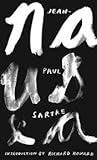
Though I did almost meet my soulmate last night coming home from Omaha, I would argue that my greatest accomplishment of the trip had to be finding the time to finish up a book that had been on my reading list since March: L'Âge de Raison (The Age of Reason, in American), the first novel in Jean-Paul Sartre's famed trilogy Les Chemins de la Liberté (The Roads to Freedom). Though often extremely weighty (sometimes unbearably so), the book went by for me rather quickly (I finished half of it on the flight to Omaha, and the other half waiting at the airport to return), and moreover, left me disquieted in a way that only truly despondent novels (and authors) can.

May 29, 2007

Rohit Reviews: After Dark

Considering my predilection for reading (and writing) about such dour and oppressive subjects as Russian literature, William Faulkner, and existentialism, it may come as no uncertain surprise to many readers that I simultaneously possess a consummate, almost inexplicable affinity towards Magic Realism. And yet, since my earliest exposure to the genre with El Coronel No Tiene Quien Le Escriba in high school—incidentally in the original Spanish—and later, Cien Años de Soledad in college (this was in English translation), both by famed Colombian author Gabriel García Márquez, I have been fascinated by the manner in which stories in this genre combine both the intensely real and the utterly fantastic to weave a truly hypnotic tale of human existence. As such, one can imagine the excitement with which I picked up Haruki Murakami's (one of the few contemporary authors I read—thanks nrt for the introduction) latest book, After Dark, after reading a review in the Economist, and only a few weeks after its U.S. release.

July 27, 2007

Rohit Reviews: 1984

About a month ago, I wrote an entry about Schrödinger's Cat (among other things) in which I argued that the people who do end up making especially prescient observations distinguish themselves in a way that we should allow people to be distinguished. No where is that statement more relevant than in discussing George Orwell's (the nom de plume of Eric Blair) prophetic dystopian vision of totalitarianism: 1984.

August 22, 2007

Rohit Reviews: The Audacity of Hope

I picked up a copy of The Audacity of Hope by Barack Obama in February 2007, about six months after it had been released. Prior to even opening the book, however, I was besieged by the breathless reactions of those around me: the best book ever; or shameless propaganda announcing his bid for presidency. It seemed that despite all his efforts to temper partisan hysteria—to see the proverbial other side—Senator Obama's own undertaking had become part of that vitriolic game of tit-for-tat, good versus evil, black versus white, that necessarily seems to consume national politics in the U.S., now more than ever in recent memory. My own response to this book is dramatically less frantic.

September 10, 2007

Rohit Reviews: Cocaine

Given my top ten placement on Google for the phrase cocaine chic (in relation to this 2005 article) as well as my 2004 postulations about drug trafficking, you, dear readers, might very well be forgiven for assuming (erroneously, of course) that with this entry I hope to review (my own personal use of) cocaine; unfortunately (for all involved), this entry will not be that salacious. However, I will say that Dominic Streatfeild's 2001 undertaking, Cocaine: An Unauthorized Biography, is easily the most interesting and compelling non-fiction book I have ever read, period. Lofty claim, I know. But then again, it's a lofty subject.

August 21, 2008

Rohit Reviews: In Cold Blood

Capote, In Cold Blood

Considering that my taste in books in recent years has tended towards dense and depressing, I thought I would take a break this summer for some lighter reading. Truman Capote's In Cold Blood was probably not the best way to accomplish my goal.

The novel, which incidentally was the subject of the 2005 film Capote, is often described as a masterpiece. I would not necessarily go as far, but I do not know that I can articulate why. Certainly, it was good, and after a slow start, I got so into it that I finished it in one marathon sitting this past Sunday. And as all reviews are want to do, I too can (and briefly will) gush on how it paints a vivid portrait of the men who perpetrated a senseless crime that ended the lives of four very sympathetic people. The manner in which Capote portrays the killers—without condemnation, almost sympathetically—is truly a masterful accomplishment.

So why the hesitation at describing it as a masterpiece? I think, in the end, it is not a reflection on this novel, but only that I have read others which I found to be better. That said, I would still recommend it to all but the most squeamish. It is well-written, quickly read, and if nothing else, brings to life a horrific true story from forty years past. Four stars of five.

March 26, 2010

Redemption (Part One)

Earlier this week, I set out a goal for myself: read two books for fun by the end of the week. If I was an optimistic person, I might have taken the numerous responses I received to that entry to sympathize or discuss books as a sign that reading is still alive and well amongst a populace inexplicably hypnotized by the abomination of reality television. But I am not an optimistic person, and a more likely explanation is simply that I am stuck in an bibliophilic echo chamber with others who pride themselves on not knowing, understanding, or caring of the ways of the (much loathed) unwashed masses.

Regardless, I am happy to report that as of today, I am 75 percent of the way to completion. In this entry, I will review my first book (which I completed earlier this week), and in next, I will discuss the one I'm making my way through this weekend.

August 26, 2010

Redemption (Part Two)

Ghost Wars

Redemption, it seems, does not come easy. About five months ago—March 22, to be exact—in an acknowledgment of how far I had fallen during my time in law school, I set forth a rather unambitious goal for myself: read two books—for fun—by the end of [] spring break. Given the steady rate of book consumption during my restive pre–law school days, this should have been no big deal.

But it was. After making quick progress with the first, A Tale of Two Cities, I bogged down. Maybe it was the interminable paper I was writing that week, or maybe I picked a book that was too long (usually not a problem for yours truly), or maybe the fact that it was nonfiction made it move slowly. For whatever reason, though, I didn't finish a second book that break. I didn't even get close. And I wouldn't for the next five months. With the whirlwind race to graduation during spring, and then the awful summer of study, reading for fun was hardly a priority. But though the indelible stench of unmitigated failure may consume me, the aura of incompleteness does not. In this post, I review Ghost Wars: The Secret History of the CIA, Afghanistan, and Bin Laden, from the Soviet Invasion to September 10, 2001 by Steve Coll. Better late than never.